
HEREND
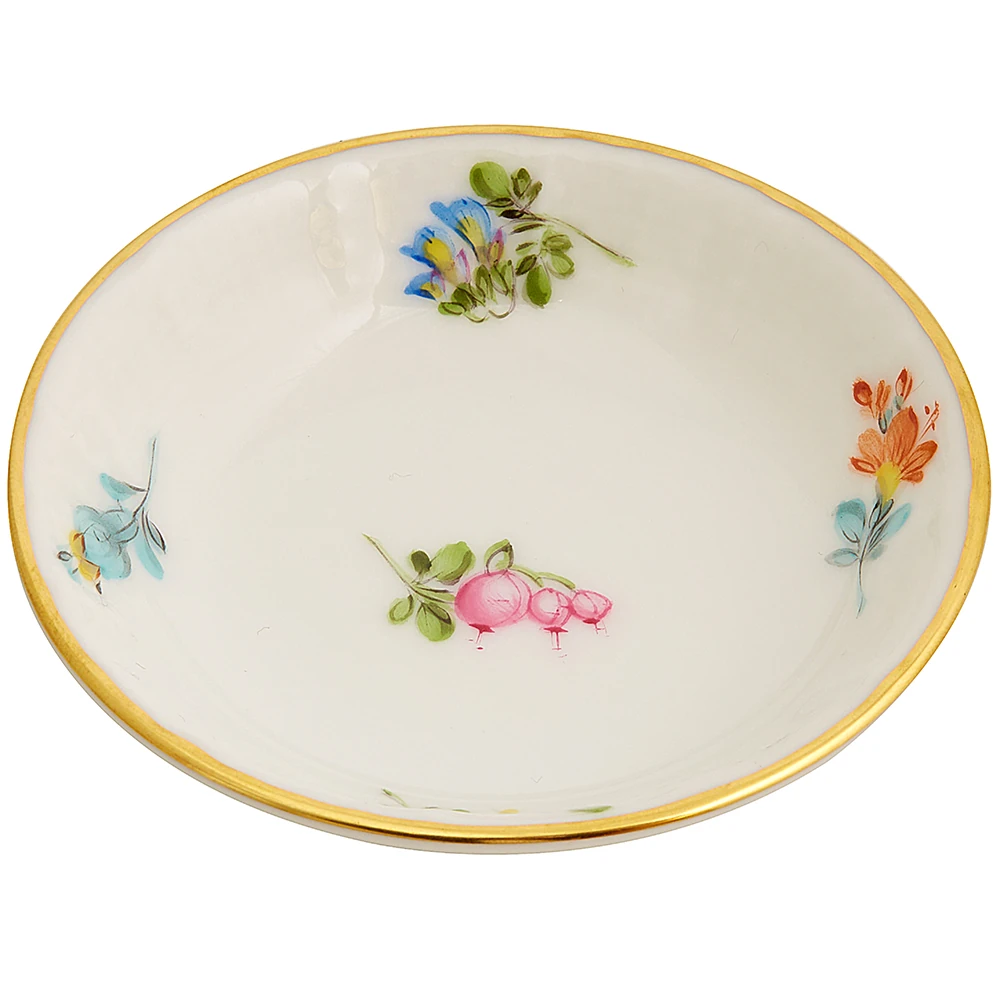
small plate


Millefleurs were originally described as a decorative motif found on 17th-century Chinese porcelain, where the plant pattern covers the entire surface. Milles Fleurs décor is a much simpler and more organized version of exuberant Chinese decoration. It features tiny flowers, which play only a secondary role in other floral decorations, such as the Bouquet de Saxe and Bouquet de Herend. The beauty of this simple pattern lies in the fine and meticulous detail with which the Herend painters depicted the floral world around them.
Forget-me-nots, rosebuds, morning glories, lilies, carnations, asters and daisies appear before us in countless varieties and forms. They are reminiscent of both the dresses worn by 19th-century ladies and the abundant flowers blooming in meadows and gardens.
Have the freedom to create your ensembles as a set or individually. By combining different patterns and decorations, create a table setting that reflects your personal style.
Herend is not just a porcelain brand, it is an art passed down from generation to generation. While traditional methods are used in the production of porcelain, technology is used only for heating the kilns. The unique whiteness, transparency and clarity of porcelain are achieved with a special blend of raw materials. Specially trained painters at Herend paint the figures in daylight. Only those who have received the title of "Chief Painter" are authorized to sign their works. Herend also offers the opportunity to re-order any lost or broken piece of any product you have purchased since production. Inspired particularly by nature in its decorations, Herend uses special birds, meaningful flowers (such as lotus and peony), butterflies and Chinese patterns in its decorations. Prices of Herend porcelain vary depending on the density and richness of the decoration.
Do not wash in the dishwasher. It is recommended to use a mild dishwashing detergent. Do not use wire or hard, scratching sponges.


