
HEREND
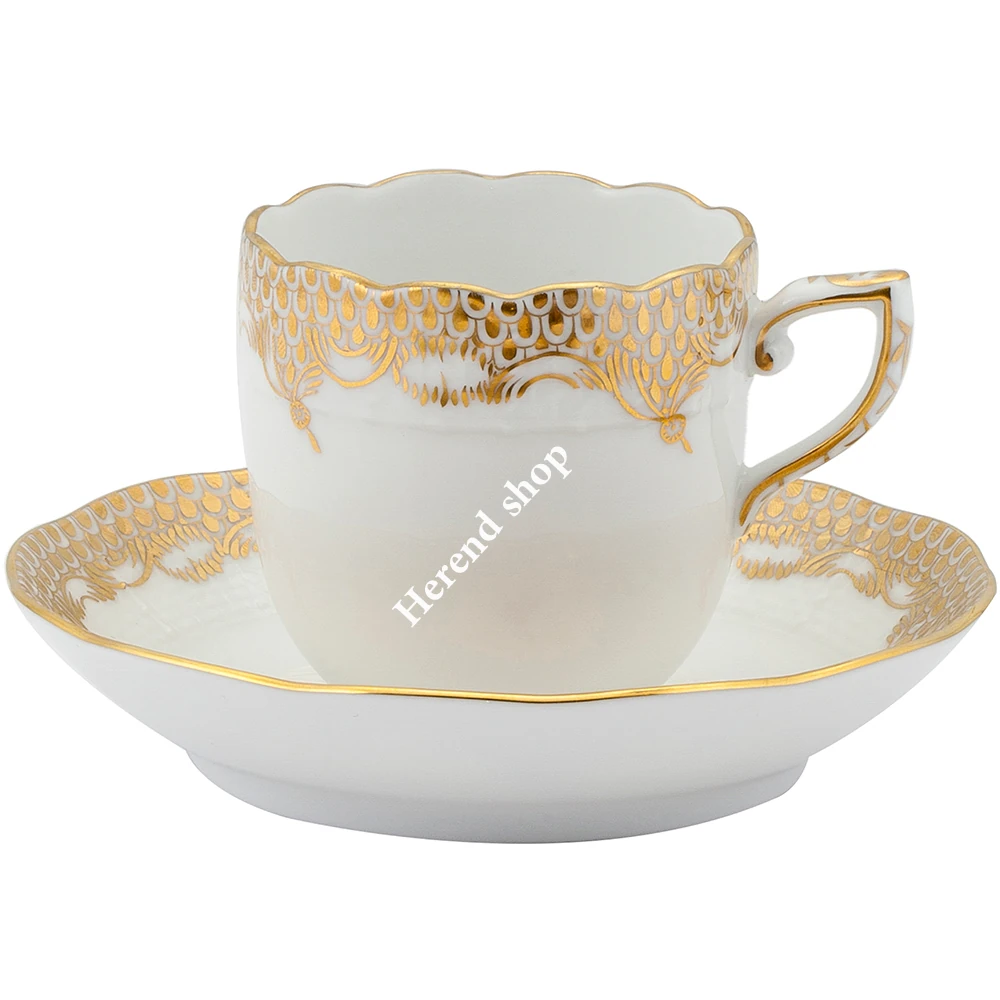
Coffee Cup


The first figurine decorated with a sequin pattern was produced by the Herend Porcelain Manufactory in 1871. The legend began in the 1930s, and sequin patterns quickly became famous worldwide as Herend's specialty. Various animal figures became highly sought-after collectors' items. Recently, a wider range of colors has emerged in addition to the original red, and gold ornaments and platinum accents have become increasingly popular. Because narrow or widening scales can only be applied to uneven surfaces by hand painting, this pattern is virtually impossible to replicate. The herringbone pattern is available in a wide variety of colors on all Herend tableware and decorative items. Mixed colors are particularly recommended for dinnerware.
Have the freedom to create your sets, either individually or in sets. By combining different patterns and decors, create a table setting that reflects your personal style.
Herend is not just a porcelain brand; it is an art passed down from generation to generation. While traditional methods are used in porcelain production, technology is utilized only for heating the kilns. Porcelain's unique whiteness, transparency, and clarity are achieved through a special blend of raw materials. Specially trained painters at Herend paint the figures in daylight. Only those who hold the title of "Chief Painter" are authorized to sign their works. Herend also offers the opportunity to reorder any lost or broken piece of any product you purchase since its production. Inspired by nature, Herend incorporates distinctive birds, meaningful flowers (such as lotuses and peonies), butterflies, and Chinese motifs into its decorations. Prices of Herend porcelain vary depending on the density and richness of the decoration.
Not dishwasher safe. It is recommended to use a mild dishwashing detergent. Do not use steel wool or hard, abrasive sponges.


